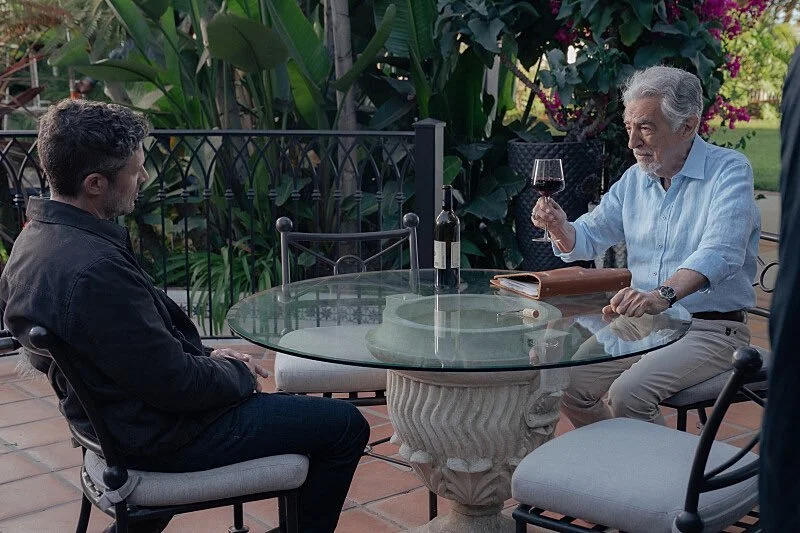
As of July 23, the fourth season of Criminal Minds: Evolution (its 19th overall) has officially concluded and, with it, the story of serial killer Elias Voit (Zach Gilford). While audiences won’t know how the team really moves on from their four season hookup with Voit until sometime in 2027, the season finale set the FBI’s Behavioral Analysis Unit (BAU) up to keep solving crimes without that specific serial killer hanging over their heads. But don’t worry, there will surely be more.
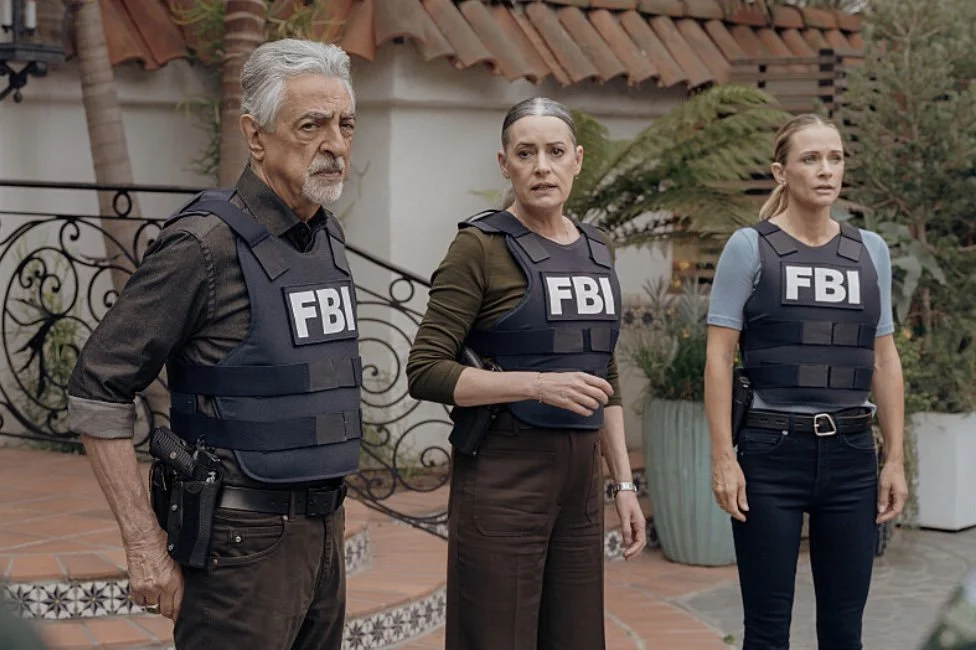
What has been most interesting for me since Criminal Minds returned with Evolution in 2022 was what their change in format — and Voit’s inclusion in each season — really showed audiences. One of the reasons I love shows like Criminal Minds (Law & Order: SVU, Bones, etc.) is that while they are shows you can lose yourself in, they are also incredible at cracking open humanity and taking a look at its innards (if you’re into that, which I am). The structure of Evolution’s four seasons thus far gave the show the opportunity to see how one prolific serial killer can change absolutely everything — and if that person themselves can change.
Over the last two seasons in particular, Evolution looked at a major “what if.” What if a person who has committed these heinous acts is suddenly different? Are they really different, or is it in act? Can someone like that actually change? The answer, you’ll find, is no — and yes.
At the end of Criminal Minds, Season 17, Episode 10, “Save the Children,” Elias Voit is placed in the general population area of the federal prison he’s at and almost immediately gets into an altercation with other prisoners. When the next season opens (Season 18, Episode 1, “Swimmer’s Calculus”), Voit has been in a coma for several months. By Season 18, Episode 2, “The Zookeeper,” Voit is awake and experiencing amnesia, which lasts for a few episodes. By the end of Season 18, and bleeding into Season 19, Voit is both different and yet not different at all.
The culmination of this shows up in Season 19, Episode 10, “Bad Blood.” After a season of the BAU trying to chase down Justin Crowley, aka “The Fan” (Justin Kirk, in an impeccable performance), Voit’s oldest daughter Hollie (played brilliantly by Allison Nordahl) has been captured in an attempt to get to Voit. Voit escaped from prison at the end of the penultimate episode (Season 19, Episode 9, “Special Agent Garrity”), but he didn’t kill anyone on his way out, which David Rossi (Joe Mantegna) and Emily Prentiss (Paget Brewster) believe shows that Voit is slightly, though not entirely, different. The true premise of the episode is a question the show has played with all season, and it’s one that other shows have dabbled with before, too. If your biological parent is a serial killer (rapist, murderer, what have you), are you destined to be one too?
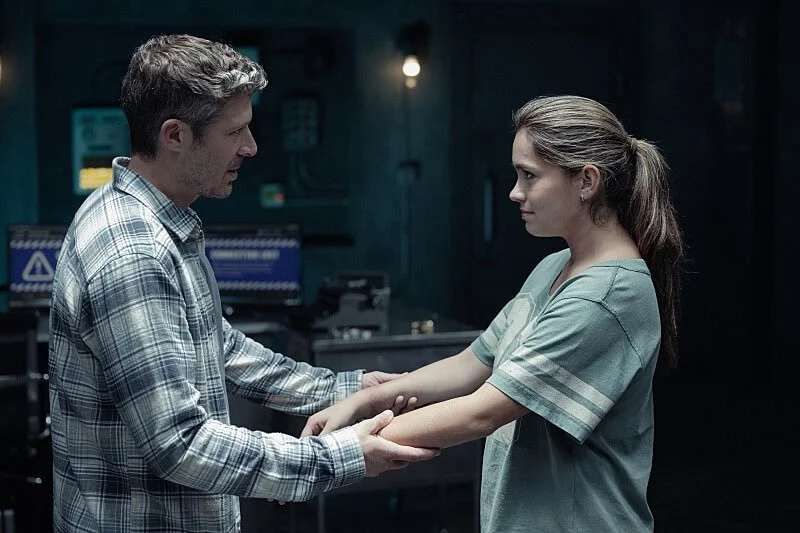
The point that I think Evolution manages to make is that while there isn’t really a serial killer gene, there are inherited traits that could lead someone to a life of violence. There’s also a distinct role that nurture plays in developing who someone becomes, and Voit and Hollie are a complex and powerful example.
Voit, raised by his violent uncle after his parents die in a fire (which Voit may or may not have started), is quite literally trained to be a killer. Uncle Cyrus (Silas Weir Mitchell) keeps young Voit (whose birth name is Lee Duval) in a small dark cellar for a while, then takes him to drop off bodies, has him feed women Cyrus is holding captive, and involves him in a host of other horrendous acts. When Voit/Lee finally gets away from Cyrus, it’s almost impossible for him to not replicate Cyrus’s behavior. And he doesn’t just replicate it. He makes it bigger than Cyrus might have ever imagined.
Here’s the interesting thing about Elias Voit (or at least one of the interesting things) — when presented with the opportunity to be “normal,” to have a girlfriend and then a wife and then children, he takes it. He moves to Seattle, changes his name, marries Sydney (Kiele Sanchez), and they have Hollie and then Harlow (Mia Coleman). For Sydney and Hollie and Harlow, Elias’s double life as a prolific serial killer is an incredible shock. He has created a life where absolutely no one would suspect he’s murdering people and storing their bodies in half-buried shipping containers all over the country.
Voit isn’t the first serial killer to have a family, of course. Nothing about Voit is particularly special, which Evolution reiterates time and again. There are things about Voit that are different — he creates an online network of serial killers, for example — but not special.
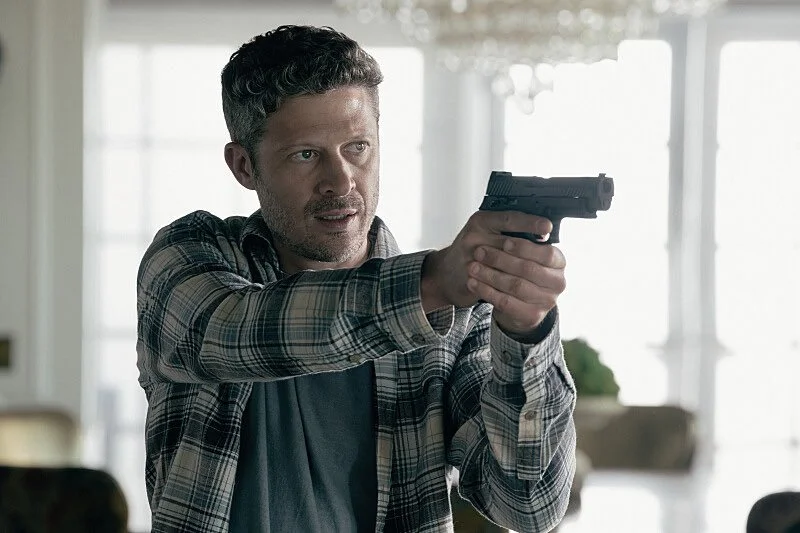
Hollie, on the other hand, is raised in what seems to be a perfectly “normal” life, only to discover that one of the parents she loves so much is actually a violent murderer. In Season 17, Episode 4, “Kingdom of the Blind,” Voit sees his children for the first time since the day of his capture, and Hollie sneaks a weapon into the jail inside her lipgloss. Furious at her father, Hollie leaps at him with the weapon out when he tries to lie to her about being a serial killer. Voit insists that she needs help, that she could end up becoming violent, and maybe she could. It’s more likely that Hollie’s response is more of a cry for help and is more directly connected to the self-harm her mother discovered in Season 17, Episode 3, “Homesick,” but either way, the BAU steps in. Prentiss tells Voit that they’ll be setting Hollie up in a program where she’ll get support for her violent and self-harming tendencies, and by the time the audience sees her again, it appears to have worked.
When Hollie first appears in “Bad Blood,” she’s attending a guest lecture being given by James Crowley at a nearby university. Hollie approaches Crowley with questions about whether violent behavior can be inherited, but when he inquires after her father, Hollie says he’s dead. Crowley knows the truth, though, something he makes abundantly clear to Hollie after he’s kidnapped her in an effort to bring Voit to him.
When Voit arrives, he free Hollie and tells her to leave. He knows the BAU is on their way and that they’ll be able to help her. But when Hollie hears Crowley choking her father, she comes in from behind and stabs him, saving her father’s life. She also unleashes some rage on Crowley, stabbing him so many times that Voit has to stop her. Then he protects her, setting up the room so that she is still tied up and he’s poised over Crowley, knife still in his hand, when the BAU enters. The BAU seems to know the truth, but they let Voit take the blame, and the higher ups at the FBI just barely push back. Prentiss and JJ (A.J. Cook) remind Hollie they are there to support her in the future, but, at least for now, the BAU’s time with Elias Voit and his family has finally come to an end.
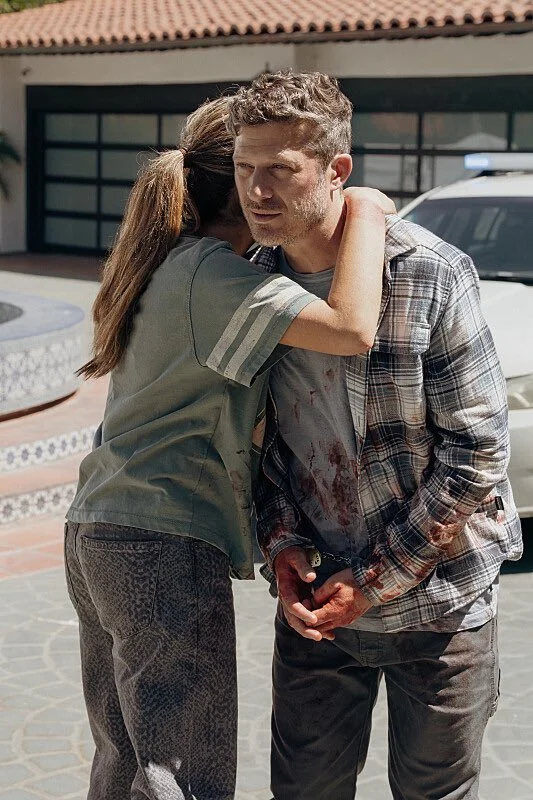
So what does all this tell us? The complicated thing about people is that we’re influenced by our environment at least as much, if not more, than by our DNA. Elias Voit/Lee Duval never really stood a chance at a “normal” life, but that didn’t stop him from wanting one or even creating one. Hollie Voit had no reason to believe her life was anything but normal, despite being raised by a serial killer.
Is Hollie destined to be a violent criminal like her father? I don’t believe so. Hollie’s behavior in “Bad Blood” seemed to me to be far more of a response to the specific incident — her father’s life being in danger — than an intrinsic need to kill someone. It’s also telling that she’s been concerned about inheriting some kind of violent trait from Elias. In my experience, being worried about whether you’ll do something often means you won’t.
I also think the way Elias changed proves that environment can alter how someone behaves. After spending time with members of the BAU, he made different choices. He’s still a violent serial killer, don’t misunderstand, but when given the opportunity to kill guards in order to escape prison, he merely injured them instead. He spent most of Season 19 trying to help the BAU catch “The Fan,” and while he was certainly still manipulative, it was more about not believing the BAU could stop Crowley than trying to return to killing himself.
One of the things I’ve loved most about the Elias Voit story over the last four seasons is its complexities, and the way it was concluded doubles down on the idea that people, at their core, are complicated beings. Quite frankly, anyone who believes we don’t have a serious influence on each other at all times isn’t paying attention.
As someone who talks to people every day, I see how deeply we impact each other all the time. The people I talk to are often in crisis or dealing with a mental health issue, and one of things that can influence them the most is their access to others. Sometimes being around others is helpful, and sometimes it isn’t, but we are not isolated beings, not even when we’re alone. Nothing reminds me of that more than seeing how characters on a show I love relate to and influence each other.
Finally, I want to say that the last two episodes of Season 19 (“Special Agent Garrity” and “Bad Blood”) are some of the best episodes of Criminal Minds I’ve ever had the pleasure of watching. The cast in its entirety has been incredible this season, but it was the performances by Joe Mantegna and Zach Gilford that really stood out for me overall. I’ll be sad to see Gilford go, because I’ve found him to be an exciting addition to the cast, but I can’t wait to see where Criminal Minds: Evolution goes next.